
Storage During a Move 2026: The Complete Relocation Guide
Using storage during a move is one of the smartest ways to reduce stress, protect your belongings, and bridge the awkward gap between leaving one home and settling into the next. In 2026, with tighter moving schedules and overlapping lease dates common across Jeddah, Riyadh, and Dammam, a temporary storage unit often turns a chaotic relocation into a calm, staged process. This guide shows you exactly how to use storage during a move to your advantage.
Whether your new place is not ready, you are downsizing, or you simply want fewer boxes underfoot on moving day, storage gives you breathing room. Let’s plan it properly.
Why Use Storage During a Move?
Moves rarely line up perfectly. Your lease ends on the first, the new keys arrive on the tenth, and your furniture has nowhere to go in between. A short-term storage unit solves that timing problem instantly.
Storage also lets you move in stages. Instead of hauling everything at once, you shift non-essentials into a unit first, then move day-to-day items when the new home is ready. That staged approach reduces breakages, lowers labour costs, and keeps your living space walkable.
- Bridge timing gaps between old and new lease dates.
- Declutter before viewings if you are selling or subletting.
- Protect valuables during renovation dust and paint.
- Split the workload across several smaller moving days.
How to Plan Storage During a Move
Good planning turns storage from an expense into a time-saver. Follow this sequence and you will avoid the most common relocation headaches.
- Sort early. Separate keep, store, donate, and discard four weeks out.
- Measure your storage needs. Estimate box count and large-item volume, then round up one size.
- Book overlap dates. Reserve the unit a few days before your move and after settling in.
- Label for retrieval. Mark boxes by room and priority, not just contents.
- Load strategically. Place last-needed items at the back and first-needed at the front.
Here is a tip I share with every client: pack a clearly marked “first night” box, keep it out of storage entirely, and load it last into your car. Toiletries, chargers, bedding, and a kettle make the first evening in a new home bearable.
Choosing the Right Unit Type for Your Move
Not all belongings tolerate the same conditions. Furniture, electronics, artwork, and documents suffer in extreme heat and humidity, which are unavoidable during a Gulf summer move. For these items, a temperature-managed unit is worth the modest premium.
Dry goods and everyday furniture sit comfortably in a moderated space such as Ambient Storage in Jeddah, which keeps conditions stable without the cost of full refrigeration. Reserve colder units only for items that genuinely need them.
Packing and Protecting Items in Storage
What you store is only as safe as how you pack it. A little discipline now prevents scratches, mould, and pest problems later.
| Item Type | Packing Tip | Storage Note |
|---|---|---|
| Furniture | Disassemble, wrap in blankets | Stand upright to save space |
| Electronics | Use original boxes, remove batteries | Prefer climate control |
| Documents & photos | Seal in plastic tubs | Keep off the floor |
| Kitchenware | Wrap glass individually | Small, heavy boxes only |
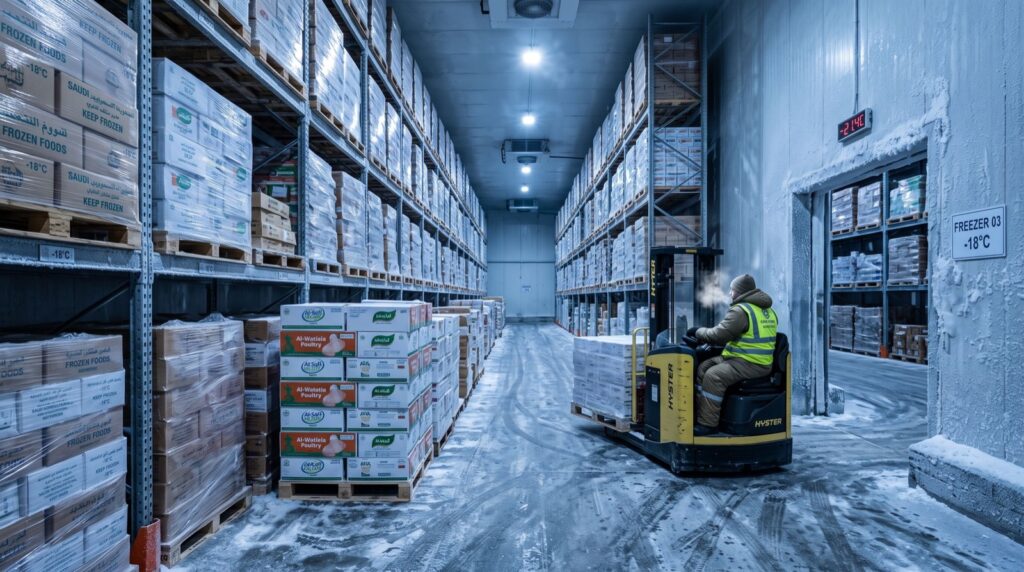
| Perishables | Do not store dry; use cold rooms | Use Frozen Storage in Dammam |
Perishable food should never go into a standard unit. If your move involves catering supplies or bulk groceries, use dedicated cold rooms so nothing spoils in transit.
Security and Insurance for Stored Belongings
During a move, your possessions may sit in storage for days or weeks, so security matters. Choose a facility with monitored access, individual locks, and surveillance. Ask whether the site offers insurance or whether your home contents policy extends to stored goods.
Government consumer guidance recommends creating a full inventory before any move; you can read practical relocation advice on the U.S. Federal Motor Carrier Safety Administration’s Protect Your Move resource. A photographed inventory speeds up any claim and settles disputes fast.
- Photograph every box and high-value item before storing.
- Keep receipts for expensive electronics and furniture.
- Confirm access hours match your moving schedule.
- Verify insurance coverage limits in writing.
Because moving companies vary widely in quality, book an experienced local team that coordinates transport and storage under one roof to avoid handoff damage.
Short-Term vs Long-Term Storage During a Move
Not every move needs the same storage commitment. Understanding the difference between short-term and long-term storage helps you pick the right plan and avoid overpaying for time you will not use.
Short-term storage suits classic lease overlaps, quick renovations, or staged moves that wrap up within a few weeks. You load once, retrieve once, and move on. Long-term storage fits relocations abroad, extended construction delays, or families downsizing while they decide what to keep.
- Short-term: flexible weekly or monthly terms, easy access, minimal packing prep.
- Long-term: discounted extended rates, deeper protective packing, climate control strongly advised.
For anything held beyond a month, invest in proper protection. Wrap furniture fully, add moisture absorbers, and choose a temperature-managed unit so nothing degrades while it waits. A little extra care up front prevents unpleasant surprises when you finally reopen those boxes.
Timing Your Storage Booking Around Moving Day
Booking storage at the last minute during peak moving season is a recipe for stress. Popular units fill fast, especially around month-end when most leases turn over. Reserve your unit two to three weeks ahead to secure the size and location you want.
Coordinate the storage window with your movers so trucks unload directly into the unit without a second handling round. Fewer touches mean fewer scratches, less labour, and a smoother move overall. That small piece of scheduling discipline pays off on the day itself.
Frequently Asked Questions
How long can I keep storage during a move?
Most facilities offer flexible terms, from a few days to several months. For a typical relocation, book a two to four week window to cover lease overlaps, then extend or release the unit as your schedule settles.
What size storage unit do I need for a house move?
A three-bedroom home usually fits in a large unit of 12–18 m². Estimate your box count and large furniture first, then round up one size so you keep an access aisle and avoid dangerous over-stacking.
Should I use climate-controlled storage during a move?
Yes, for electronics, wood furniture, artwork, and documents, especially during a hot, humid Gulf summer. Ambient or chilled units keep humidity stable and prevent warping, mould, and corrosion while your items wait.
How do I pack a unit so I can still reach things?
Load last-needed items at the back and first-needed items near the door. Label boxes by room and priority, leave a narrow aisle down the middle, and store frequently used items at the front for quick retrieval.
Conclusion
Using storage during a move transforms a stressful relocation into a staged, controlled process. Sort early, size your unit correctly, protect fragile and perishable items in the right conditions, and secure your belongings with a proper inventory. Do that and your 2026 move becomes smoother, safer, and cheaper. Ready to bridge the gap between homes? Reserve a flexible storage unit today and move on your own timeline.