Water is deceptively destructive. Within minutes of a pipe bursting, a washing machine overflowing, or a flash flood finding its way through a doorway, it begins to silently infiltrate drywall, flooring, and structural framing. For residents in Indio, California, where the desert climate can swing between intense summer monsoons and dry, dusty seasons, understanding what Emergency Water Extraction Indio is and why it matters can mean the difference between a manageable repair and a catastrophic loss.
What Is Emergency Water Extraction?
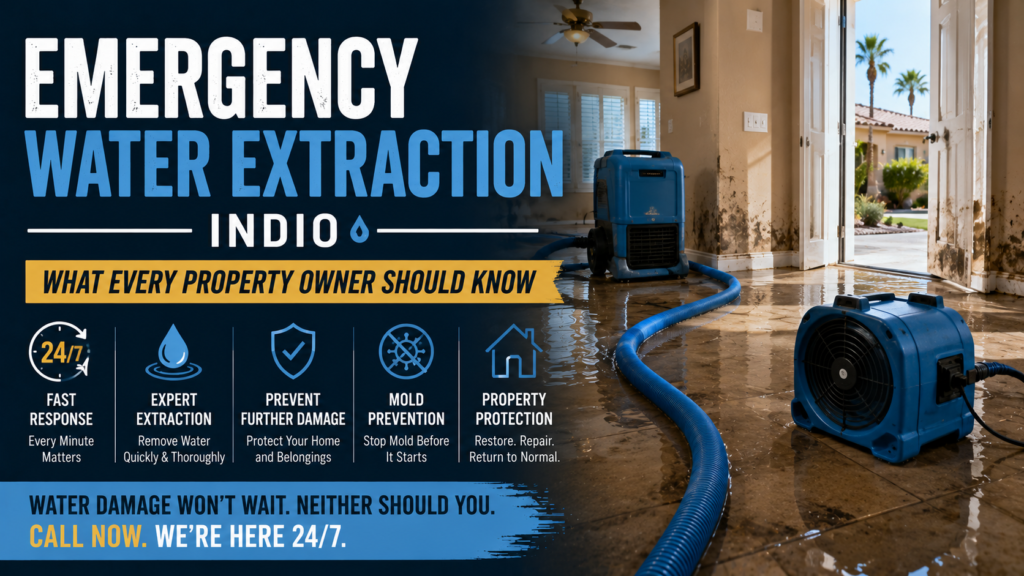
Emergency water extraction is the process of rapidly removing standing or absorbed water from a property using industrial-grade pumps, vacuums, and specialized equipment. It is the first critical step in any water damage restoration process, and timing is everything. Water that sits for even a few hours begins damaging materials at an accelerating rate. Structural wood swells, drywall softens and crumbles, carpets and padding become saturated breeding grounds for mold, and subfloors begin to buckle.
Unlike a household mop-and-bucket approach, professional emergency water extraction involves truck-mounted or portable extraction units capable of removing thousands of gallons of water in a short period. These machines draw water out from carpet fibers, padding, hardwood seams, and other porous surfaces that absorb moisture long before it becomes visible on the surface.
Why Indio Properties Face Unique Risks
Indio sits in the eastern end of the Coachella Valley, a region that experiences both extreme summer heat and seasonal weather events. The desert environment creates a false sense of security many homeowners assume that because rainfall is infrequent, water damage is unlikely. However, the sources of water damage in Indio extend far beyond rain.
Aging plumbing infrastructure in older homes is one of the most common culprits. The extreme heat that Indio experiences regularly exceeding 110°F in summer puts tremendous stress on pipe materials and joint connections. Water heaters, dishwashers, and refrigerator water lines all operate under constant thermal pressure. When they fail, they fail fast, and the resulting water can spread across an entire floor within minutes.
Additionally, when Indio does experience rainfall, the desert soil has limited absorption capacity after dry months. Flash flooding becomes a real risk, and water from outside can intrude through doors, garage openings, and foundation cracks. The combination of infrequent but intense precipitation events and aging residential infrastructure makes emergency water extraction a genuinely essential service in this region.
The Science Behind Water Migration
One of the most misunderstood aspects of water damage is how far water travels from its source. Water follows the path of least resistance it seeps through grout lines, migrates along floor joists, wicks up drywall, and collects in wall cavities far removed from the original leak. By the time a homeowner notices a wet spot on the carpet, the moisture has often already reached adjacent rooms, the subfloor, and possibly even the ceiling of a level below.
Professional water extraction teams use moisture meters and thermal imaging cameras to map this migration. These tools detect moisture behind walls and beneath floors without requiring destructive testing. This accurate picture of where water has traveled is essential for ensuring that all affected materials are properly dried not just the areas that appear wet to the eye.
What Happens If Water Extraction Is Delayed?
The timeline of water damage is well understood in the restoration industry, and it is not forgiving. Within the first 24 hours, drywall begins to swell and break down, furniture finishes begin to bleed, and metal surfaces begin to tarnish. Between 24 and 48 hours, mold spores which are always present in the environment at low concentrations find the moisture they need to begin colonizing. Within 72 hours and beyond, mold growth becomes visible, structural wood begins to warp and weaken, and the scope of necessary repairs expands significantly.
This progression explains why emergency water extraction services operate around the clock. In Indio, where humidity levels can accelerate mold growth in affected areas, delay is not merely inconvenient it transforms a water damage event into a mold remediation project as well.
The Water Extraction Process Step by Step
When a professional extraction team arrives at an Indio property, the process follows a structured sequence. First, a safety inspection is conducted to identify any electrical hazards standing water and live circuits are a life-threatening combination. Once safety is confirmed, the source of water intrusion is located and stopped if it hasn’t been already.
Next, the team categorizes the water. Clean water from a broken supply line carries different health and material implications than gray water from an appliance drain or black water from a sewage backup. This categorization determines the protective protocols and disposal requirements that must be followed.
Extraction then begins with the most powerful equipment available for the situation. High-capacity truck-mounted units are preferred for large volumes of standing water, while portable units with specialized attachments address water in tight or hard-to-reach spaces. Wet vacuums and specialized wand extractors pull water from carpet and upholstery.
After bulk water removal, the focus shifts to structural drying. Industrial air movers are positioned to create strategic airflow patterns across wet surfaces, while commercial dehumidifiers remove the water vapor that those air movers lift from materials. Moisture readings are taken at regular intervals typically every 24 hours to document that drying is progressing toward established targets.
Monitoring and Documentation
One aspect of professional emergency water extraction that is often overlooked is documentation. Moisture readings are recorded throughout the drying process to create a paper trail that demonstrates the scope of damage and the effectiveness of remediation. This documentation is typically required by homeowners’ insurance policies and helps streamline the claims process.
In Indio, where older neighborhoods may have homes that have previously sustained undocumented water damage, these readings also help identify pre-existing moisture problems that may require additional attention.
Common Questions Indio Residents Ask
Does emergency water extraction include drying? Extraction and drying are two distinct but closely related phases. Extraction removes liquid water; drying removes absorbed and evaporated moisture. Professional services typically address both as part of a coordinated response.
Can water under a slab be extracted? This is a common scenario in Indio homes built on concrete slab foundations. Specialized equipment and techniques, including drilling into the slab and using drying mats, can address moisture that has migrated beneath concrete.
Is water damage covered by homeowners insurance? Coverage depends on the policy and the cause of the water damage. Sudden and accidental water damage such as a burst pipe is typically covered. Flood damage from an external source generally requires separate flood insurance.
How long does drying take? Most residential water damage events require three to five days of active drying under controlled conditions. Larger losses, or those involving structural materials, may take longer.
Water damage does not wait, and neither should property owners. Understanding what emergency water extraction involves, why Indio’s specific environment creates unique risks, and what the process entails empowers homeowners and business owners to act quickly and decisively when water intrudes. Swift, professional intervention is consistently the most effective way to limit damage, reduce repair costs, and protect the health of everyone who occupies the property.